gh#142: a VRAM footprint estimate honest enough to refuse a load on. More...
#include <algorithm>#include <cstdint>#include <string>#include <utility>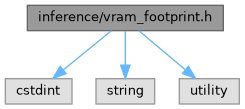
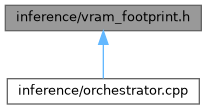
Go to the source code of this file.
Classes | |
| struct | entropic::FootprintInputs |
| Everything the estimate needs, with no orchestrator or filesystem. More... | |
| struct | entropic::FootprintEstimate |
| An estimate, or an explicit admission that there isn't one. More... | |
Namespaces | |
| namespace | entropic |
| Activate model on GPU (WARM → ACTIVE). | |
Enumerations | |
| enum class | entropic::Offload { entropic::none , entropic::full , entropic::partial_unknown } |
| Where a tier's weights land, as far as the estimate can tell. More... | |
Functions | |
| double | entropic::kv_scale_for_cache_type (const std::string &type) |
| Cost of a KV cache type relative to f16. | |
| Offload | entropic::classify_offload (int gpu_layers) |
| Classify a tier's offload request into a priceable placement. | |
| double | entropic::kv_bytes_per_token (const FootprintInputs &in) |
| Per-token KV cost in bytes for this tier's cache configuration. | |
| FootprintEstimate | entropic::estimate_vram_footprint (const FootprintInputs &in) |
| Estimate the VRAM a tier will occupy, or report that it cannot. | |
| int | entropic::recommend_context_length (const FootprintInputs &in, uint64_t available_bytes) |
| Largest context length that fits, for the "won't fit" recommendation. | |
Variables | |
| constexpr uint64_t | entropic::kBaseKvPerTokenF16 = 16ull * 1024ull |
| KV bytes per token at f16, the rate the v2.2.4 estimate assumed. | |
| constexpr int | entropic::kAllLayersSentinel = 99 |
gpu_layers at or above this means "every layer" (llama.cpp's 99). | |
Detailed Description
gh#142: a VRAM footprint estimate honest enough to refuse a load on.
- Why this exists
- The v2.2.4 admission gate (REQ-INFER-019) compared a tier's estimated footprint against a VRAM budget and refused with
ENTROPIC_ERROR_TIER_MODEL_TOO_LARGE. It was never reached in practice: the budget came only fromENTROPIC_VRAM_BUDGET_BYTES, so on any deployment that did not set that variable the budget was 0, the gate was disabled, and a failed allocation aborted the host process inside llama.cpp (ggml-backend.cpp:179: GGML_ASSERT(buffer)) with no diagnostic.
Switching the gate on required fixing the estimate first, because the old one was wrong in three ways that all bias toward REFUSING configurations that work:
- it counted the entire weights file no matter how many layers were actually offloaded, so a partially offloaded model was priced as if fully resident. Qwen3.6-35B-A3B IQ3_XXS (~13 GB) runs at
gpu_layers=15on an 11 GB card; a gate built on that estimate would refuse it. - it priced KV at a flat 16 KiB/token regardless of
cache_type, roughly 4x over-counting a q4_0 cache. - it ignored the vision projector, which is the allocation that actually failed in the gh#142 abort.
- What this does NOT count — compute buffers
- llama.cpp reserves graph/activation scratch per context at load time, sized by ubatch and model internals rather than by context length. Measured on this repo's own benchmark: 1222 MiB for a gemma-4 E4B MTP head's context, at a 512-token ubatch. That is more than twice the default
vram_reserve_mbof 512, and a speculative configuration pays it TWICE because it holds two contexts.
It is not counted here because it cannot be derived from anything this header is willing to read — it needs the model's hidden size and layer count, i.e. GGUF metadata. vram_reserve_mb is the knob that must cover it, and callers running near the edge should raise it rather than trust the default.
The consequence is honest and worth stating plainly: this estimate can admit a configuration that then fails to load. It is designed to prevent the catastrophic case (an abort that kills the host process) and to produce an actionable recommendation — not to guarantee a load succeeds. A load that fails after admission surfaces as a typed error, which is the outcome gh#142 asked for.
- The rule this file follows
- An estimate that cannot be bounded is reported as UNKNOWN rather than guessed. An unknown estimate leaves the gate open — the engine declines to refuse what it cannot price. Refusing a working configuration is a worse failure than missing one that would have failed, because the operator has no way to tell a false refusal from a real one.
Kept pure and free of vendor types so every case is CPU-unit-testable; the device query that supplies available lives in device_memory.h.
- Version
- 2.11.0
Definition in file vram_footprint.h.